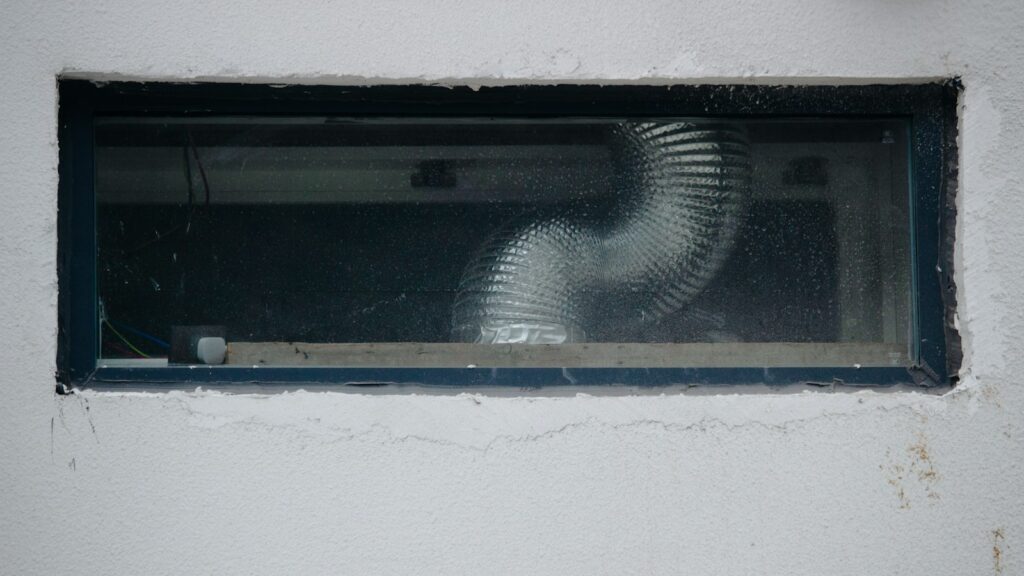
Brisbane's summer humidity is hard on ducted air conditioning. Warm, moist air meets cold surfaces inside the system, condensation forms, and if air is moving slowly or the system sits idle for a stretch, mould has everything it needs. You might notice it as a musty smell when the air con first starts, speckled spots on outlets or a damp, stale feeling in rooms that should feel crisp and cool. Apartments with closed-up rooms and houses left empty over holidays are especially prone to it.
We deal with mould in two stages. First comes the physical clean, because sanitiser sprayed over dust and growth does very little. Ducts, outlets and the return air are brushed and extracted so the surfaces are as clean as we can get them. Then we apply a sanitising treatment suited to ductwork to the affected areas, paying close attention to outlets, the plenum and any runs that sit near the indoor unit where condensation is most likely. Where mould has stained a surface deeply, we will tell you if cleaning alone may not remove every mark.
Just as important is asking why the moisture is there. We look for things like uninsulated duct sections, a blocked or slow condensate drain and gaps that let humid roof air in. Fixing the cause helps stop the problem from coming straight back. We pass on practical tips too, such as running the fan for a while after cooling and using dry mode on sticky days, so moisture has less chance to settle.